


Reviewed by our world-class neurosurgical team.
A New Era in Spine Surgery
The history of spine surgery for degenerative disc disease tells a story of progressive refinement, but until recently, it was a story with an unsatisfying compromise at its center. For more than half a century, spinal fusion dominated the surgical treatment landscape. The concept was straightforward: if a damaged disc between two vertebrae causes pain, eliminate the disc and permanently connect those vertebrae so they can't move. The pain from that degenerated disc would go away because the disc itself would essentially cease to exist, replaced by bone that fuses the adjacent vertebrae into a single, immobile unit.
Fusion worked—and still works—for the right patients. It reliably eliminates pain arising from the disc itself. But that success came with a trade-off that became increasingly apparent as surgeons followed patients for years and decades after their procedures. The spine is a remarkably sophisticated mechanical system where each segment works in concert with its neighbors. When you eliminate motion at one level through fusion, you don't eliminate the need for motion in your spine overall. You still need to bend, twist, reach, and move through your daily activities. That motion has to come from somewhere, so the segments above and below the fusion compensate by moving more than they were designed to.
This increased stress on adjacent segments accelerates their degeneration. Studies tracking fusion patients long-term showed that twenty to thirty percent developed adjacent segment disease—new disc degeneration and pain at the levels next to their fusion—within ten years of surgery. Some patients who'd had successful fusion at one level found themselves needing another surgery at the adjacent level years later, and occasionally another one after that, gradually reducing flexibility as more and more segments were fused.
Surgeons recognized this problem but lacked a solution until advances in engineering and biomaterials made motion-preserving disc replacement possible. The American Association of Neurological Surgeons has been instrumental in advancing these innovative motion-preserving techniques.
The concept is elegant: instead of eliminating motion at the degenerated disc, replace it with an artificial disc that restores normal disc height while allowing motion to continue. Pain relief comes from removing the damaged, painful disc, while preservation of motion means adjacent segments aren't overloaded.
The Engineering Behind Artificial Discs
Creating a device that can withstand the enormous forces the spine experiences while allowing smooth, controlled motion in multiple directions represents a remarkable engineering achievement. Your natural discs are complex structures—a tough outer ring of fibrous tissue surrounding a gel-like center that acts as a hydraulic shock absorber. They allow motion while bearing loads that can exceed several times your body weight during activities like lifting or running.
Modern artificial discs replicate these functions through sophisticated mechanical design. The typical implant consists of metal endplates—usually titanium or cobalt-chromium alloys chosen for their strength, biocompatibility, and ability to integrate with bone. These endplates are textured or coated to encourage bone ingrowth, creating a permanent bond with the vertebral bodies above and below. Between these endplates sits the bearing surface—either a polyethylene core that provides cushioning and allows motion, or a metal-on-metal articulation that permits movement through precisely engineered curved surfaces that slide against each other.
The engineering tolerances are incredibly tight. The bearing surfaces must be smooth enough to allow decades of motion without excessive wear, yet designed to permit motion in the directions your spine naturally moves—flexion and extension (bending forward and backward), lateral bending (side to side), and rotation (twisting). At the same time, the device must provide stability, preventing excessive motion that could damage nerves or cause instability. It's a delicate balance, and modern implants achieve it through years of development, testing, and refinement.
The result is a device about the size of a quarter (for cervical discs) or a half-dollar (for lumbar discs), no thicker than the natural disc it replaces. Once implanted and integrated with your bone, it functions seamlessly, allowing motion so natural that patients often forget they have an artificial disc at all. Long-term studies tracking patients for ten, fifteen, even twenty years show that these devices maintain their function without significant wear or breakdown, a testament to the engineering that went into their development. FDA-approved artificial disc devices undergo rigorous testing to ensure safety and durability.

Cervical Versus Lumbar Applications
The implementation of disc replacement technology has evolved differently in the neck versus the lower back, driven by differences in anatomy, biomechanics, and the technical challenges involved in each location. Cervical disc replacement—replacing discs in the neck—reached FDA approval in the United States in 2004, earlier than lumbar replacement, and has accumulated the longest track record of outcomes data.
The neck's anatomy makes it relatively accessible for disc replacement. Surgeons approach from the front of the neck through a small incision, moving aside the esophagus and trachea to access the spine directly. The nerves and blood vessels are easier to protect than in the lower back, and the forces the cervical spine experiences, while significant, are less than those in the lumbar spine. These factors made cervical disc replacement technically more straightforward to develop and perform consistently. Research available through PubMed documents the excellent long-term outcomes of cervical disc replacement.
Outcomes from cervical disc replacement have been excellent. Multiple studies comparing it to cervical fusion—the traditional alternative—show that disc replacement patients maintain motion at the treated level, experience similar or better pain relief, return to activities more quickly, and most importantly, show lower rates of adjacent segment degeneration requiring additional surgery. The reduction in adjacent segment problems is particularly significant, because neck fusion patients showed high rates of requiring additional surgery at adjacent levels within five to ten years. By preserving motion, disc replacement appears to protect those adjacent segments from excessive stress. Research published by the North American Spine Society continues to validate these superior long-term outcomes.
Lumbar disc replacement—replacing discs in the lower back—presents greater technical challenges. The approach requires working through or around major blood vessels in the abdomen, typically requiring collaboration with a vascular surgeon to safely access the spine. The lower back experiences far greater forces than the neck, particularly at the L4-L5 and L5-S1 levels where most degenerative disc disease occurs. The proximity to the pelvis and the different biomechanics at the base of the spine create additional complexity.
Despite these challenges, lumbar disc replacement has proven highly successful for appropriately selected patients. Younger, active patients with degenerative disc disease at one or two levels, good bone quality, and healthy facet joints achieve excellent outcomes. They experience pain relief comparable to fusion while maintaining motion that lets them return to demanding physical activities, sports, and work that would be difficult or impossible with a fusion. The key is careful patient selection—lumbar disc replacement works beautifully for the right patient but isn't appropriate for everyone, and part of our expertise lies in identifying who will benefit most.
Who Benefits Most from Disc Replacement?
The question of candidacy for disc replacement deserves careful thought because the answer determines whether you're likely to have an excellent outcome or a disappointing one. This isn't a procedure that works reasonably well for most people—it works exceptionally well for the right patients and poorly for the wrong ones. The difference lies in the details of your specific condition, your anatomy, your overall health, and your goals.
Age plays a significant role, though it's not an absolute cutoff. Younger patients—typically those between eighteen and sixty years old—benefit most from motion preservation because they have more years ahead to experience the advantages of maintaining flexibility and avoiding adjacent segment problems. A thirty-five-year-old with degenerative disc disease faces decades of life ahead. Preserving motion now may prevent the need for additional surgeries twenty or thirty years in the future. For a seventy-year-old, the calculus is different. The proven track record of fusion, the reduced importance of maintaining competitive athletic ability, and the shorter time horizon make fusion often the better choice.
Activity level matters enormously. Disc replacement shines for patients who want to return to demanding physical activities. If you're an avid runner, a weekend warrior on the tennis court, someone whose work requires heavy lifting or repetitive bending, or simply someone who values being able to move without restriction, motion preservation offers benefits that fusion cannot match. Fusion patients can certainly remain active, but there are real limitations, particularly with multi-level fusions. Disc replacement patients, by contrast, can often return to essentially unrestricted activity once healed.
The extent of your disc degeneration determines eligibility. Disc replacement works best for single or two-level disease—one or two discs that have degenerated and are causing problems, while the rest of your spine remains relatively healthy. Multi-level degeneration often indicates more widespread spinal arthritis that makes fusion the more reliable choice. The facet joints—the small joints at the back of each spinal segment—must be healthy. If they're arthritic, motion will continue to cause pain even after disc replacement, and fusion becomes necessary to eliminate that pain.
Bone quality is critical because the metal endplates must integrate firmly with your vertebral bodies. Osteoporosis or significant osteopenia can compromise this integration, creating risk of subsidence where the implant sinks into the weakened bone. Good bone density ensures solid fixation and long-term stability of the implant.
When disc replacement isn't appropriate, fusion usually provides the better answer. Significant spinal instability, where vertebrae are slipping excessively or there's evidence of ligament damage that has destabilized the spine, requires fusion's rigid fixation. Severe facet arthritis, multi-level disease, poor bone quality, previous surgery at the same level, or certain spinal deformities all shift the equation toward fusion. There's no shame in needing fusion—it remains an excellent operation for the right indications. The key is matching the procedure to the patient.
The Surgical Experience
Understanding what the surgery actually involves helps demystify the process and prepare you mentally for what to expect. The journey begins well before the day of surgery, with comprehensive planning that has become remarkably sophisticated.
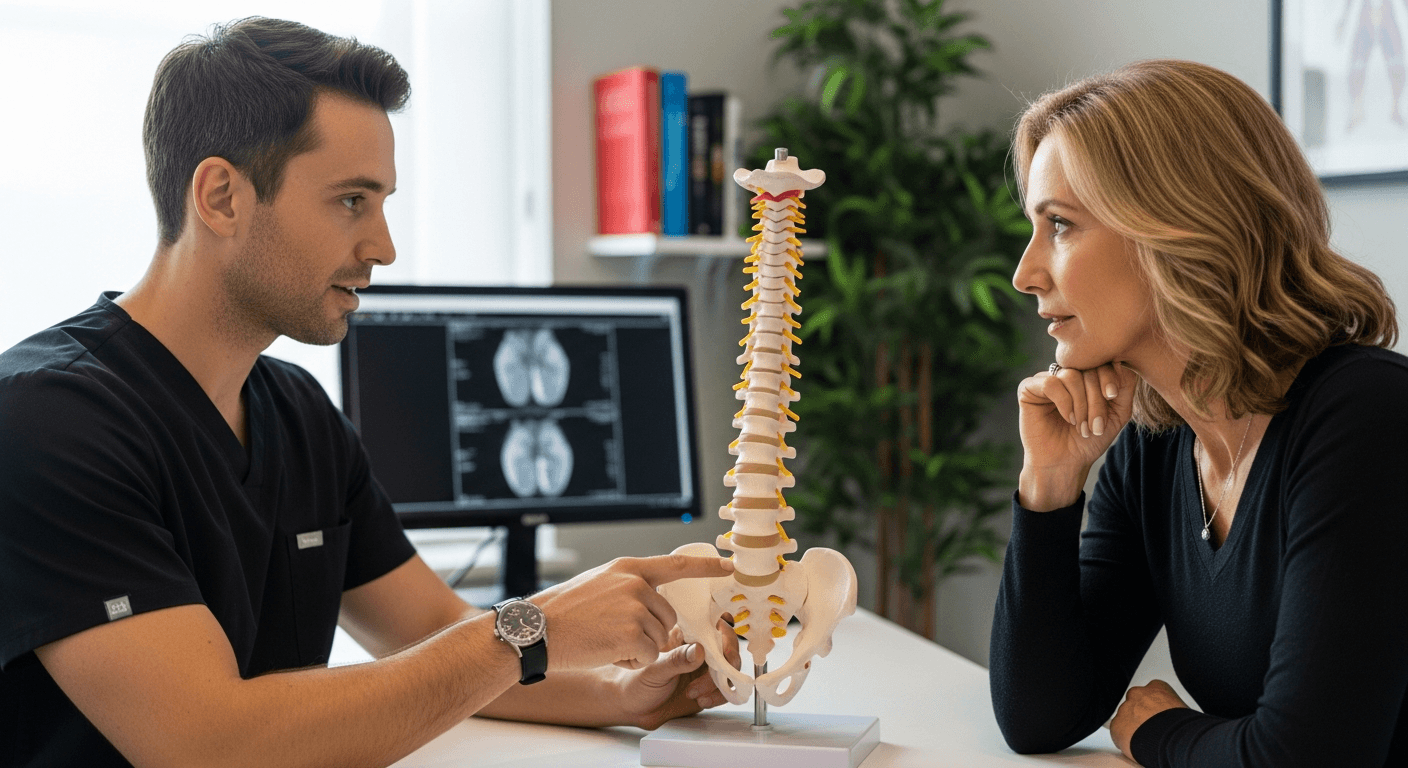
We start with detailed imaging analysis. Your MRI shows the soft tissues—the degenerated disc, any nerve compression, the health of adjacent discs and facet joints. CT scans reveal bone structure and help us measure precisely the size of implant you'll need. Flexion-extension X-rays where you bend forward and backward show whether there's abnormal motion indicating instability. From this imaging, we create a detailed surgical plan—the exact size of the implant, the approach we'll use, the challenges we might encounter based on your specific anatomy.
Pre-operative optimization addresses any medical conditions that could affect surgery or healing. If you smoke, quitting for at least four weeks before surgery dramatically reduces complication risks. If you're taking blood thinners, we'll work with your prescribing physician to determine when to stop them before surgery. If you have diabetes, optimizing blood sugar control before surgery promotes better healing. These may seem like minor details, but they significantly impact outcomes.
The surgery itself differs substantially between cervical and lumbar procedures. For cervical disc replacement, you'll have a small incision—typically one to two inches—at the front of your neck. Working between major structures rather than through them, we access the spine, remove the degenerated disc, carefully prepare the surfaces of the vertebrae above and below, and position the artificial disc. The precision required is extraordinary—positioning must be exact to ensure proper motion and load distribution. Most cervical disc replacement patients go home the same day or stay just one night. You'll walk within hours of surgery, and neck motion is actually encouraged rather than restricted.
Lumbar disc replacement is more involved. The approach is from the front of the abdomen, requiring us to work with or around the major blood vessels that lie in front of the spine. We typically collaborate with a vascular surgeon who helps access the spine safely, protecting the vessels throughout the procedure. Once we've accessed the spine, we remove the degenerated disc, prepare the vertebral endplates, and position the implant with micrometer precision. The surgery typically takes two to three hours. Most patients stay one or two nights, walking the same day as surgery and gradually increasing activity as comfort allows.
In both cases, the immediate post-operative period is remarkably smooth compared to what most patients expect. Pain is manageable with oral medications. You're encouraged to move rather than stay immobile. There's no rigid bracing. The decompression of nerves often provides immediate relief of leg or arm pain, though some soreness at the surgical site is normal and expected.
Recovery and the Path Forward
The recovery experience after disc replacement differs substantially from what most people expect based on stories they've heard about traditional spine surgery. The timeline progresses through distinct phases, each with its own characteristics and milestones.
In the immediate days and weeks after surgery, most patients are surprised by how well they feel compared to their pre-surgery expectations. The nerve decompression achieved by removing the damaged disc often provides immediate relief of radiating arm or leg pain. You'll walk within hours of surgery—in fact, early mobilization is encouraged because it promotes healing, prevents complications like blood clots, and helps you regain confidence in movement. Hospital stays are brief, often just one night for cervical procedures and one to two nights for lumbar ones.
The first few weeks at home involve gradual activity progression. You'll be walking regularly, increasing distance as comfort permits. Most restrictions involve avoiding heavy lifting, excessive bending or twisting, and high-impact activities that could stress the surgical site before healing is complete. But unlike fusion, which often requires rigid bracing to prevent motion while bones grow together, disc replacement patients typically don't need braces at all. The motion is encouraged—your artificial disc is designed to move, and gentle motion promotes healthy recovery.
Return to work timelines depend on your job's physical demands. Sedentary desk work is often possible within two to four weeks once you're off narcotic pain medications and comfortable sitting for extended periods. Light physical work might require six to eight weeks. Heavy labor or jobs involving repetitive bending, lifting, or overhead work typically require three to four months before full duty clearance.
The longer-term recovery picture is where disc replacement really shines. Research tracking patients for two, five, ten, and even fifteen years after disc replacement shows consistently positive results. Satisfaction rates exceed ninety percent—most patients report significant pain relief and improved function. Motion at the treated level is maintained, allowing patients to bend, twist, and move naturally. Perhaps most significantly, rates of adjacent segment disease requiring additional surgery are substantially lower than after fusion, suggesting that motion preservation achieves its intended goal of protecting neighboring discs from excessive stress.
By six months, most patients have returned to unrestricted activities including sports and physically demanding work. By one year, tissue healing is complete, and patients have typically achieved maximum benefit from the procedure. Many patients at this point report they rarely think about their surgery anymore—their spine simply works, allowing them to focus on living rather than managing pain.
Pushing Boundaries with Multi-Level Procedures
One of the most exciting frontiers in disc replacement involves treating patients with degeneration at multiple levels. Historically, if you had two or three discs causing problems, multi-level fusion was the only option, but eliminating motion at multiple segments creates substantial stiffness and dramatically increases adjacent segment stress.
Two-level cervical disc replacement has become well-established with FDA approval and excellent outcome data. Treating two adjacent degenerated cervical discs with artificial discs rather than fusion allows patients to maintain near-normal neck motion while eliminating pain from both problematic levels. Studies comparing two-level disc replacement to two-level fusion show better motion preservation, higher patient satisfaction, and lower adjacent segment problems with disc replacement.
Hybrid constructs represent another innovation—combining disc replacement at one level with fusion at an adjacent level. This approach makes sense when one disc is appropriate for replacement (healthy facets, good bone quality) while an adjacent disc has characteristics that make fusion the better choice (facet arthritis, severe degeneration). By preserving motion where possible and eliminating it where necessary, hybrid constructs optimize outcomes for complex multi-level disease.
Three-level disc replacement remains less common and requires significant surgical expertise, but for select patients it offers an alternative to three-level fusion that would otherwise create severe stiffness. At Legacy Neurosurgical & Spine Centers, our surgeons are among the few in Georgia with the experience and expertise to perform these complex multi-level procedures, providing options for patients who might be told elsewhere that fusion is their only choice.
Stories of Transformation
The abstract benefits of motion preservation become tangible when you see how they change people's lives. Michael's story is representative of many patients we've helped. At forty-five, he'd built a successful career as a construction foreman, but two levels of cervical disc degeneration were threatening to end it. Severe neck pain radiating into both arms made it difficult to wear a hard hat or look up at construction sites. Conservative treatment—physical therapy, medications, injections—provided only temporary relief.
Cervical fusion would have solved the pain problem, but it would have created a new one. Losing motion at two cervical levels would have made it difficult to look up, turn his head, or perform many of the movements his job required daily. His options seemed to be continuing in pain or changing careers. Two-level cervical disc replacement provided a third path.
The surgery addressed both degenerated discs while preserving motion. Michael was home the next day, walking and moving carefully. At two weeks, he was off pain medications. At six weeks, he returned to light duty, supervising from an office rather than being on-site. At three months, he was back to full duty, wearing his hard hat and moving around construction sites with nearly normal motion. Five years later, he continues working without limitations, with no adjacent level problems on follow-up imaging. The preserved motion allowed him to keep the career he'd built over decades.
Stories like Michael's drive home why we've embraced disc replacement technology. It's not just about eliminating pain—fusion can do that. It's about eliminating pain while preserving function, allowing patients to return to the lives they want to live rather than the limited lives fusion would require them to accept.

Why Experience and Expertise Matter
Disc replacement is a technically demanding procedure where the surgeon's experience dramatically affects outcomes. Proper implant positioning is absolutely critical—if the device sits even a few millimeters off center, or if the angle isn't correct, motion patterns can be abnormal, stress distribution uneven, and results disappointing. This precision requires both extensive training and significant experience performing the procedure regularly.
At Legacy Neurosurgical & Spine Centers, our surgeons have performed hundreds of disc replacement procedures over the years. This volume matters because surgical technique improves with repetition. The nuances of patient positioning, approach, exposure, disc removal, endplate preparation, implant selection, and final positioning become refined through experience. Complications that might surprise a low-volume surgeon are anticipated and avoided by experienced surgeons who've encountered every variation of anatomy and every potential challenge.
Our Joint Commission-accredited surgical centers provide the infrastructure necessary for optimal outcomes. Advanced imaging equipment built into the operating rooms allows real-time visualization throughout the procedure. Specialized instruments designed specifically for disc replacement ensure precision. Surgical teams who perform these procedures regularly work with practiced efficiency, anticipating needs and responding seamlessly to any situation that arises.
We utilize the latest-generation implants with proven track records—devices that have been studied in clinical trials, tracked in registries, and demonstrated durability and effectiveness in thousands of patients over years of follow-up. We employ intraoperative navigation when appropriate to ensure precise positioning. Our imaging protocols before and after surgery provide detailed information about implant position and function. Everything we do is based on evidence from clinical research rather than marketing claims or anecdote.
The Horizon of Possibility
The field of disc replacement continues to evolve with innovations that promise even better outcomes in the future. Next-generation materials with improved wear resistance may extend implant lifespan even further. Customizable implants designed for individual patients based on their specific anatomy could optimize fit and function. Research is exploring ways to integrate biological factors—growth factors, stem cells, tissue engineering—to enhance healing and perhaps even regenerate natural disc tissue. The National Institute of Neurological Disorders and Stroke funds cutting-edge research in spine surgery innovation.
Minimally invasive approaches continue to improve, with techniques that reduce incision size, minimize tissue trauma, and accelerate recovery. What required a three-inch incision five years ago might be possible through a one-inch incision five years from now. Expandable implants that can be inserted through small spaces and then expanded to final size once in position represent one avenue of development.
The patient populations who might benefit from disc replacement continue to expand as we gain more experience and data. Older patients who might have been excluded in the past based on age alone may prove to be excellent candidates if their bone quality and overall health are good. Three-level disease, once considered beyond the reach of disc replacement, is becoming more feasible as surgical techniques and implants improve. Even adjacent segment degeneration after previous fusion—once thought impossible to treat with disc replacement—is being explored as a potential indication.
Revision scenarios where previous disc replacement hasn't worked or has developed complications present unique challenges that experienced surgeons are learning to address. The knowledge base grows with each patient treated, each complication encountered and solved, each long-term outcome tracked and analyzed.
Finding the Right Path Forward
If chronic neck or back pain from degenerative disc disease is limiting your life, if you value staying active and want to maintain flexibility, if you're looking for an alternative to fusion that preserves your spine's natural motion, disc replacement deserves serious consideration. But the decision requires careful evaluation by experienced spine surgeons who can determine whether you're a good candidate and discuss realistic expectations.
At Legacy Neurosurgical & Spine Centers, we offer free consultations where you can have your imaging reviewed, your questions answered, and your options discussed honestly. We'll tell you if we think disc replacement is appropriate for your specific situation. We'll also tell you if we think fusion would be better, or if continued conservative management makes more sense. Our goal isn't to perform a particular procedure—it's to help you achieve the best possible outcome, whatever that requires.
We offer second opinions for patients who've been recommended for surgery elsewhere and want another perspective. Bringing fresh eyes to your imaging and hearing how another experienced surgeon views your options can provide valuable insight and confidence in your decision.
With nine locations across the Atlanta area—Atlanta, Marietta, Riverdale, Peachtree City, Carrollton, Cartersville, Columbus, Rome, and Tucker—you can choose the location most convenient for you. Our patient care coordinators can be reached at (770) 291-8987 or book online to schedule your consultation.
Come prepared with your imaging studies if you have them, along with a list of treatments you've tried and questions you want answered. Expect a thorough evaluation and an honest conversation about whether disc replacement makes sense for your specific situation. We'll discuss all your options—conservative treatment if you haven't exhausted it, fusion if that's more appropriate, or disc replacement if you're a good candidate.
The technology of motion-preserving disc replacement represents one of the most significant advances in spine surgery over the past two decades. For the right patients, it offers outcomes that would have been impossible just a generation ago—pain relief combined with preserved motion, allowing return to active, unrestricted lifestyles. Whether that describes your situation requires expert evaluation, but the possibilities are worth exploring.
This article provides general information about motion-preserving disc replacement and is not a substitute for professional medical advice. Individual treatment recommendations depend on comprehensive evaluation by a qualified spine surgeon.