



Reviewed by our world-class neurosurgical team.
The Conservative Treatment Journey
Every patient's path to our office tells a story, and remarkably, those stories share common themes. Perhaps you've been dealing with back pain for months, trying to ignore it at first, then reluctantly scheduling appointments with your primary care doctor. Maybe you've dutifully attended physical therapy sessions three times a week for twelve weeks, performed home exercises daily, tried multiple medications, and received epidural injections that provided temporary relief before the pain returned. Or perhaps you're experiencing something more alarming—weakness that's gradually getting worse, numbness that's spreading, or pain so severe it's stealing your sleep and making everyday activities feel impossible.
At Legacy Neurosurgical & Spine Centers, we understand this journey intimately because we've guided thousands of patients through it. Our philosophy is grounded in a fundamental principle: surgery should always be the last resort, pursued only when conservative treatments have been genuinely exhausted and you're facing significant functional limitations or progressive neurological problems. This isn't just about being cautious—it's about recognizing that the vast majority of spine conditions improve with non-surgical treatment, given enough time and the right approach. Our board-certified neurosurgeons follow evidence-based protocols to determine when surgery becomes necessary.
Physical therapy, when properly executed, can strengthen the muscles supporting your spine, improve flexibility, correct movement patterns that contribute to pain, and often resolve symptoms completely. Anti-inflammatory medications reduce the swelling around irritated nerves and inflamed joints. Epidural steroid injections deliver powerful anti-inflammatory medication directly to the source of nerve compression. Lifestyle modifications—weight loss, ergonomic improvements at work, activity modification—address the underlying factors that contributed to your condition in the first place. The North American Spine Society provides comprehensive research on conservative treatment effectiveness.
For most patients, this conservative approach works. Pain gradually diminishes, function returns, and surgery never becomes necessary. But for a subset of patients—roughly fifteen to twenty percent—conservative treatment provides inadequate relief, and continuing down that path means accepting a diminished quality of life or risking permanent nerve damage. Recognizing when you've crossed that threshold requires careful attention to specific warning signs.
Understanding the Critical Warning Signs
The decision to move beyond conservative treatment isn't arbitrary or based on a simple timeline. It's based on objective evidence that your condition is either not responding to treatment or is causing problems that require urgent intervention. Some signs are absolute red flags that demand immediate attention, while others indicate that the risk-benefit calculation has shifted toward surgery being the better option.
When Nerves Are at Risk
Your nervous system is remarkably resilient, but it has limits. Nerves can tolerate a certain amount of compression before they begin to malfunction, and if that compression continues long enough, the damage can become permanent. Progressive neurological symptoms—weakness that's getting worse over weeks or months, numbness that's spreading, loss of coordination or balance—signal that nerves are under enough pressure to interfere with their normal function. This is your body's warning system telling you that time is not on your side.
Consider what it means when you start dropping things because your grip strength has diminished—potentially indicating a pinched nerve requiring attention. Or when you notice you're tripping more often because your foot isn't lifting normally when you walk—a condition called foot drop that indicates significant nerve compression. These aren't minor inconveniences; they're evidence that the nerves controlling your muscles are being damaged. The longer the compression continues, the less likely full recovery becomes, even with successful surgery. Nerves can only tolerate so much pressure for so long before the damage becomes irreversible.
The most urgent neurological symptom is loss of bowel or bladder control, which can indicate cauda equina syndrome—a condition where the bundle of nerves at the bottom of the spinal cord is severely compressed. This is a surgical emergency. The window for intervention is measured in hours to days, not weeks. If you experience sudden loss of bowel or bladder function, numbness in the groin or genital area, or severe weakness in both legs, you need to get to an emergency room immediately.
When Pain Becomes Unbearable
Pain is subjective and deeply personal. What one person tolerates with minimal disruption might be completely debilitating for another. But there's a point where pain crosses a threshold from inconvenient to life-altering. If you've genuinely given conservative treatment a thorough trial—not just a week or two, but six to twelve weeks or more of consistent, comprehensive treatment—and your pain remains severe enough to prevent you from working, caring for your family, sleeping through the night, or participating in activities that give your life meaning, surgery deserves serious consideration.
The key question isn't just "Does it hurt?" but rather "How is this pain affecting your life?" Are you relying on narcotic pain medications just to get through the day, accepting the side effects and risks because the alternative is unbearable? Have you had to reduce your work hours, change jobs, or go on disability because the pain makes it impossible to perform your duties? Do you find yourself declining invitations, avoiding social situations, and withdrawing from relationships because the pain dominates your existence? These are signs that conservative treatment, whatever its theoretical merits, isn't delivering the results you need.
It's worth noting that pain alone—even severe pain—isn't necessarily an indication for surgery unless it correlates with identifiable structural problems that surgery can address. Some spine pain is mechanical, arising from joints, muscles, and ligaments in ways that surgery can't fix. This is why a comprehensive evaluation is so important. We need to understand not just that you hurt, but why you hurt, and whether surgical intervention can address that underlying cause.
When Imaging Tells a Clear Story
Modern imaging technology has revolutionized spine care by letting us see precisely what's happening inside your spine. MRI scans reveal soft tissues with remarkable clarity—herniated discs pressing on nerves, ligaments thickened from arthritis encroaching on the spinal canal, inflammation around nerve roots, degenerative changes in discs that have lost their normal height and cushioning ability. CT scans show bone in exquisite detail—spurs that have developed from arthritis, fractures, the precise amount of canal narrowing from stenosis, vertebrae that have slipped out of position. The National Institute of Neurological Disorders and Stroke provides comprehensive information about diagnostic imaging techniques.
But imaging alone never tells the whole story. Many people have herniated discs on MRI who experience no symptoms whatsoever. Studies of completely asymptomatic adults show that thirty to forty percent have disc bulges or protrusions on MRI, yet they have no pain, no functional limitations, no problems at all. This is why we insist on correlation—your symptoms, examination findings, and imaging results all need to align and tell the same story. When they do, we can identify with confidence the structural problem causing your symptoms and determine whether surgery can fix it.
A herniated disc that's clearly pressing on the specific nerve root that corresponds to your leg pain and weakness makes surgery a logical consideration if conservative treatment has failed. Spinal stenosis severe enough that the MRI shows significant compression of the nerve sac, combined with symptoms of leg pain and weakness that worsen with walking, presents a clear surgical target. Spondylolisthesis where one vertebra has slipped significantly on another, combined with evidence of instability on flexion-extension X-rays and symptoms of back pain and leg pain that match the level involved, creates a compelling case for stabilization.
The imaging has to match the clinical picture. When it does, surgery has the best chance of success. When it doesn't—when the imaging shows problems that don't correlate with symptoms, or when symptoms can't be explained by what we see on imaging—surgery becomes much less predictable, and conservative management often remains the better choice even if it's not providing complete relief.

The Comprehensive Evaluation Process
When you come to our office wondering whether surgery might be necessary, you'll experience an evaluation process designed to answer that question with as much certainty as possible. This isn't a quick visit where we glance at an MRI and make a recommendation. It's a comprehensive assessment that typically takes an hour or more, during which we gather all the information needed to make the best decision for your specific situation.
We begin with a detailed conversation about your medical history. How long have you been experiencing symptoms? What treatments have you tried, and for how long? What was the response to each treatment? These questions help us understand whether conservative treatment has been genuinely exhausted or whether there might be approaches you haven't tried. We discuss the impact on your daily life—not just whether you hurt, but how that pain affects your ability to work, care for your family, sleep, exercise, and engage in activities that matter to you. We review your overall health, identifying any conditions that might increase surgical risk or affect healing.
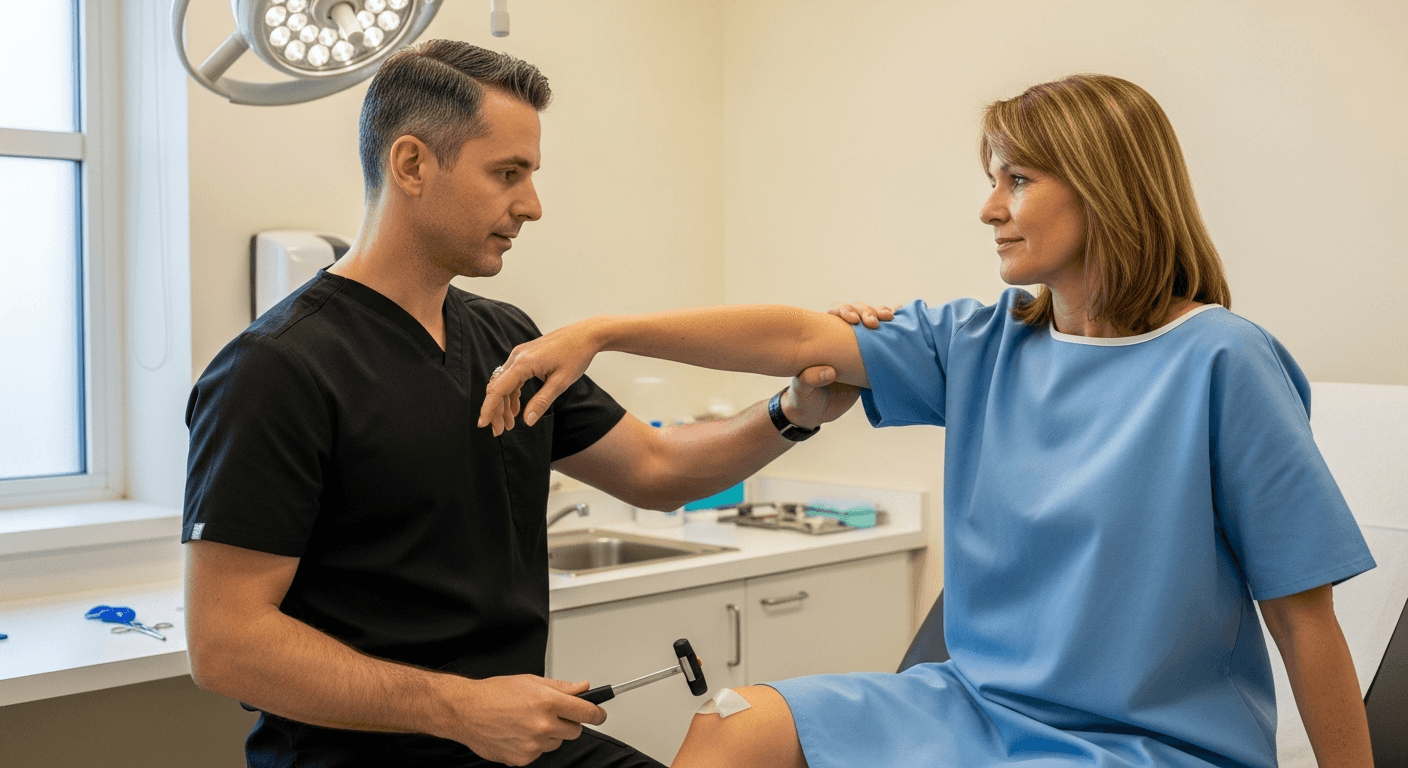
The physical examination provides information that imaging alone cannot. We watch how you walk, looking for limping, listing to one side, or abnormal patterns that suggest nerve problems or pain avoidance. We test range of motion in your spine—how far you can bend forward, backward, and to each side. We assess muscle strength in your arms and legs, checking for weakness that might indicate nerve compression. Reflexes tell us about nerve function at specific levels. We perform provocative tests—specific maneuvers designed to reproduce your symptoms and identify their source. A positive straight leg raising test suggests nerve root compression from a herniated disc. Pain with facet loading tests points toward arthritis in the small joints of the spine.
Then comes the imaging analysis, where we correlate what you've told us and what we've found on examination with what your MRI, CT scans, and X-rays show. We're looking for that alignment—symptoms, examination findings, and imaging results that all point to the same problem. When we find it, we can make a recommendation with confidence. When we don't find it, we're honest about the uncertainty and usually recommend against surgery, because outcomes are poor when we can't clearly identify what we're trying to fix.
Questions You Should Be Asking
One of the best predictors of satisfaction with medical care is feeling informed and involved in decision-making. Passive patients who simply accept recommendations without understanding the reasoning often feel less satisfied with their care, even when outcomes are good. Engaged patients who ask questions, understand their options, and participate in decisions tend to feel more satisfied and often have better outcomes, perhaps because they're more committed to their treatment plan.
When we recommend surgery, or when we discuss it as an option, there are questions you should absolutely ask. What exactly is causing your symptoms? Not just "herniated disc" or "stenosis," but specifically—which disc is herniated, which nerve is compressed, how does that explain your leg pain and weakness? Understanding your diagnosis at this level helps you evaluate whether the proposed surgery makes sense.
What are all your treatment options? Even at the point where we're discussing surgery, you should understand what alternatives exist. Maybe there are conservative treatments you haven't tried. Maybe there are different surgical approaches—minimally invasive versus traditional open surgery, fusion versus disc replacement, single-level versus multi-level surgery. Understanding the full menu of options ensures you're making an informed choice rather than simply accepting the first recommendation.
What are the risks and benefits specific to your case? General risk statistics are useful, but they're not as relevant as your personal risk based on your age, overall health, the specific procedure being recommended, and the surgeon's experience. A herniated disc surgery in a healthy forty-year-old carries very different risks than a multi-level fusion in a seventy-year-old with diabetes and heart disease. Similarly, benefits should be discussed specifically—what percentage of patients with your specific condition experience significant relief? What does "success" mean for this procedure? Is it complete pain elimination, or is it fifty percent pain reduction with improved function?
What is the surgeon's experience with your specific procedure? Experience matters in spine surgery, perhaps more than in many other surgical fields. A surgeon who performs dozens of lumbar fusions annually will have better outcomes and fewer complications than one who does a few per year. Don't be shy about asking. A competent, confident surgeon will answer directly and provide outcome data. If a surgeon becomes defensive about questions about their experience, that's a red flag.
What will recovery look like? Get specific. When will you be able to walk? Drive? Return to work? Resume exercise? What restrictions will you face and for how long? What will physical therapy involve? Realistic expectations about recovery help you plan and prevent disappointment when you're not "back to normal" as quickly as you hoped.
Finally, what happens if surgery doesn't work? No surgeon can guarantee success. Asking about revision rates, what the next steps would be if the surgery doesn't provide adequate relief, and whether the surgeon would continue to care for you if you're among the unlucky percentage who don't get better shows that you're thinking realistically about all possibilities.
Ensuring Conservative Treatment Has Been Thorough
Before surgery becomes the answer, we want to be confident that conservative treatment has been given a genuine opportunity to work. Too often, patients come to us saying they've "tried everything," but when we dig deeper, we find that physical therapy lasted only three or four sessions before they quit because it wasn't helping immediately. Or they tried one epidural injection and gave up when relief lasted only a few weeks. Or they took anti-inflammatory medication inconsistently because of stomach upset and never tried alternative medications.
Effective physical therapy for spine conditions isn't a casual endeavor. It typically requires two to three sessions per week for six to twelve weeks, combined with daily home exercises. The therapy should be spine-specific, delivered by a physical therapist who specializes in back and neck problems, and should include not just passive treatments like heat and massage but active treatments like strengthening, flexibility work, and movement pattern training. If your physical therapy consisted of a few sessions of electrical stimulation and massage without any strengthening component, you haven't really tried physical therapy in a way that's likely to help. OrthoInfo offers detailed patient education on spine rehabilitation protocols.
Medications offer multiple options beyond basic ibuprofen. Prescription-strength NSAIDs, muscle relaxants for spasms, neuropathic pain medications like gabapentin or pregabalin for nerve pain—these different classes of medications address different pain mechanisms. If one doesn't work, others might. Working with your doctor to find the right medication regimen is part of comprehensive conservative treatment. The FDA regulates these medications to ensure safety and effectiveness.
Interventional procedures like epidural steroid injections deliver powerful anti-inflammatory medication directly to irritated nerves. A single injection might provide temporary relief, but a series of injections over weeks to months can sometimes break the cycle of inflammation and provide lasting improvement. Other procedures like facet joint injections, medial branch blocks, and radiofrequency ablation can address specific pain generators. These options should be explored when appropriate before moving to surgery.
Lifestyle modifications can seem like bland advice, but their impact can be profound. Losing twenty or thirty pounds reduces the load on your spine significantly. Ergonomic improvements at work—a better chair, a standing desk, proper lifting techniques—can eliminate ongoing stressors that prevent healing. Core strengthening exercises create natural stability that reduces strain on spinal structures. These aren't alternatives to medical treatment; they're complementary approaches that address underlying causes rather than just symptoms.
Making a Decision You Can Live With
The decision to proceed with spine surgery should never feel rushed or pressured. It's a significant step that carries real risks alongside potential benefits. At Legacy Neurosurgical & Spine Centers, we pride ourselves on honest, evidence-based counseling that supports whatever decision you ultimately make.
If we recommend surgery, we'll explain exactly why—what specific problem we're addressing, why conservative treatment has failed or is unlikely to succeed, what the surgery will accomplish, and what realistic expectations should be. If we don't think surgery is appropriate, we'll tell you that too, even though it might mean you seek care elsewhere. Our goal isn't to perform surgery; it's to help you achieve the best possible outcome, whether that's through surgery or continued conservative management.
We offer second opinions, both to our patients and to patients who've seen other surgeons and want a fresh perspective. Second opinions are smart, not insulting. Complex medical decisions benefit from multiple viewpoints. If another surgeon has recommended surgery and you're uncertain, come see us. If we've recommended surgery and you want to hear from someone else, we'll support that completely. Confidence in your decision comes from feeling fully informed, and if a second opinion provides that confidence, it's worth pursuing.
Throughout this process, communication remains open. You should never feel that your questions are unwelcome or that you're being hurried toward a decision. Spine problems are rarely so urgent that you can't take time to think, research, discuss with family, and process information. The only exceptions are true emergencies like cauda equina syndrome, progressive neurological deficits where nerves are at risk of permanent damage, or certain types of spinal infections or tumors. For the vast majority of conditions, taking days or even weeks to make a thoughtful decision is perfectly appropriate.
Moving Forward with Clarity
With nine locations across the Atlanta area and over twenty years of experience treating complex spine conditions, Legacy Neurosurgical & Spine Centers has helped thousands of patients navigate the difficult question of when conservative treatment is no longer enough. We've earned our reputation not by performing unnecessary surgery, but by providing honest, expert guidance that helps each patient find the right path for their specific situation. Our facilities meet the rigorous standards of Joint Commission accreditation, ensuring the highest quality and safety.
If you're struggling with spine pain that hasn't responded adequately to conservative treatment, if you're experiencing neurological symptoms that worry you, if you're simply wondering whether you've reached the point where surgery should be considered, we invite you to schedule a consultation. We offer free consultations at all nine locations, providing an opportunity to have your questions answered, your imaging reviewed, and your options discussed without pressure or obligation.
You can reach our patient care coordinators at (770) 291-8987 or book online. They'll help you schedule an appointment at whichever of our locations is most convenient—Atlanta, Marietta, Riverdale, Peachtree City, Carrollton, Cartersville, Columbus, Rome, or Tucker. Bring your imaging studies if you have them, along with records of treatments you've tried. Come prepared with questions. Our goal is to provide the information and expertise you need to make the best decision for your health and your future.
The path from conservative treatment to surgical intervention isn't always clear, but you don't have to navigate it alone. Our experienced team is here to provide the expert guidance, honest assessment, and comprehensive care you deserve.
This article is intended for educational purposes and does not constitute medical advice. Individual treatment decisions should be made in consultation with a qualified healthcare provider after comprehensive evaluation.