


Reviewed by our world-class neurosurgical team.
What is Minimally Invasive Spine Surgery?
The evolution of spine surgery over the past two decades has been nothing short of revolutionary. Minimally invasive spine surgery (MISS) represents not just an incremental improvement but a fundamental reimagining of how we approach spinal disorders. For generations, patients faced a difficult trade-off: live with debilitating pain or undergo major surgery that required large incisions, extensive muscle cutting, and months of difficult recovery.
Today, that calculus has changed dramatically. Minimally invasive spine surgery uses specialized instruments, advanced imaging technology, and refined surgical techniques to access and treat spinal problems through incisions that are sometimes less than an inch long. Rather than cutting through layers of muscle to reach the spine, surgeons can now work through narrow tubes that gently separate muscle fibers, preserving the integrity of tissues that are crucial for strength and mobility.
The difference is profound. Where traditional open spine surgery might require a four to six-inch incision and significant muscle dissection, minimally invasive techniques can often accomplish the same therapeutic goals through incisions small enough to be covered by a bandage. This isn't simply about aesthetics—though patients certainly appreciate less scarring. It's about fundamentally reducing the trauma your body experiences, which translates directly into better outcomes, less pain, and faster return to the activities you love. The National Institute of Neurological Disorders and Stroke provides extensive research on these advanced surgical approaches.
Understanding the Real Benefits
When patients first hear about minimally invasive surgery, they often focus on the smaller incisions. While that's certainly a visible benefit, the advantages run much deeper. The real magic of these techniques lies in what we preserve rather than what we remove. In traditional open spine surgery, surgeons had no choice but to cut through multiple layers of muscle, detach them from the bone, and hold them aside for the duration of the procedure. These muscles—the multifidus, erector spinae, and others—are essential for spinal stability and function. OrthoInfo provides comprehensive patient education on spinal anatomy and surgical approaches.
The trauma to these muscles created much of the post-operative pain patients experienced. Muscles that have been cut need time to heal, and during that healing process, they become weak and prone to spasm. Patients would spend weeks or months rebuilding strength they had before surgery. With minimally invasive approaches, we use tubular retractors—essentially specialized tubes that create a working channel to the spine by gently spreading muscle fibers apart rather than cutting them. When we finish the procedure and remove the retractor, those muscle fibers simply fall back into place, largely undisturbed.
This preservation of muscle integrity creates a cascade of benefits. Post-operative pain is significantly reduced because we haven't traumatized the muscles. Hospital stays shrink dramatically—many patients go home the same day or stay just one night, compared to three to five days with traditional surgery. The risk of infection drops substantially because smaller incisions mean less exposure to potential contaminants. And perhaps most importantly for many patients, recovery timelines compress from months to weeks.
Consider the typical timeline: after traditional open lumbar fusion, patients might not return to sedentary work for eight to twelve weeks, and those with physical jobs might wait four to six months. After minimally invasive lumbar fusion, many patients return to desk work within four weeks and resume physical work within eight to twelve weeks. That's not a marginal improvement—it's transformative for people whose livelihoods depend on their ability to work.
The Conditions We Treat with Precision
Minimally invasive techniques have evolved to address virtually every common spinal condition that once required traditional open surgery. Herniated discs—those painful bulges of disc material that press on spinal nerves—can now be treated with microdiscectomy procedures that take less than an hour and require only a small incision. Through high-powered microscopes and specialized instruments, surgeons can remove the offending disc fragment while leaving surrounding structures completely undisturbed.
Spinal stenosis, the gradual narrowing of the spinal canal that affects millions of Americans as they age, presents a more complex challenge. Traditional treatment required extensive removal of bone and ligament through large incisions. Today, minimally invasive decompression techniques allow us to create more space for compressed nerves while preserving the structural integrity of the spine. Using tubular retractors and high-definition endoscopes, we can selectively remove only the bone and ligament necessary to relieve pressure, leaving everything else intact. The American Association of Neurological Surgeons provides extensive patient education resources on these advanced techniques.
For patients with degenerative disc disease—where the cushioning discs between vertebrae break down and cause pain—we can now perform artificial disc replacement through minimally invasive anterior approaches. These procedures maintain natural spinal motion while eliminating pain, and because we approach from the front of the spine rather than the back, we avoid cutting through any back muscles at all. Recovery is remarkably quick, with many patients walking within hours and returning to normal activities within weeks. FDA-approved artificial disc devices have demonstrated excellent safety and efficacy profiles in clinical trials.
Even complex conditions like spondylolisthesis, where one vertebra slips forward on another, can now be addressed through minimally invasive fusion techniques. Using specialized screws and rods inserted through small incisions, we can stabilize the unstable segment while preserving surrounding muscle and bone. The fusion rates—how often the bones successfully grow together—are just as good as traditional surgery, but the path to getting there is far gentler on the body.
Technology That Makes the Difference
The success of minimally invasive spine surgery depends entirely on technology that simply didn't exist twenty years ago. Intraoperative navigation systems use advanced imaging to create a three-dimensional map of your spine, allowing surgeons to track their instruments in real-time with sub-millimeter accuracy. It's similar to GPS for your car, but far more precise. This technology means we can place screws, remove disc fragments, and perform decompressions with absolute confidence, even through small incisions that limit direct visualization.
High-definition endoscopes—tiny cameras that provide magnified views of the surgical field—let us see structures we could never visualize with the naked eye, even in traditional open surgery. We can identify individual nerve roots, distinguish between different tissue types, and work with precision that would have been impossible just a generation ago. Fluoroscopy, a form of real-time X-ray imaging, guides us throughout the procedure, ensuring every step is executed exactly as planned.
At Legacy Neurosurgical & Spine Centers, our surgeons have performed thousands of minimally invasive procedures using this advanced technology. Experience matters enormously in these techniques. The learning curve is steep, and expertise develops over years and hundreds of cases. Our team has been performing these procedures since they first became available, refining our techniques, learning from each case, and consistently achieving outcomes that meet or exceed published results from the leading spine centers in the country.
Determining If You're a Candidate
Not every patient or every spinal condition is appropriate for minimally invasive surgery. Some situations still require traditional open approaches—extensive deformities, severe instability, revision surgeries where anatomy has been altered, or cases where we need broad exposure to address multiple problems simultaneously. The decision requires careful evaluation and honest discussion about what's most likely to achieve your treatment goals.
When you come for a consultation, we begin with a detailed conversation about your symptoms. How long have you been experiencing pain? What makes it better or worse? Have you had tingling, numbness, or weakness? How has this condition affected your daily life, your work, your ability to do the things you enjoy? These questions aren't just small talk—they provide crucial information about the source of your problem and the likelihood that surgery will help. Our board-certified neurosurgeons bring the expertise and training that come from rigorous certification standards.
The physical examination comes next. We assess your range of motion, test muscle strength and reflexes, and perform specific maneuvers designed to identify the source of your pain. Straight leg raising tests can indicate nerve compression from a herniated disc. Facet loading tests suggest arthritis in the small joints of the spine. Palpating the spine itself can reveal areas of tenderness that correlate with specific structural problems.
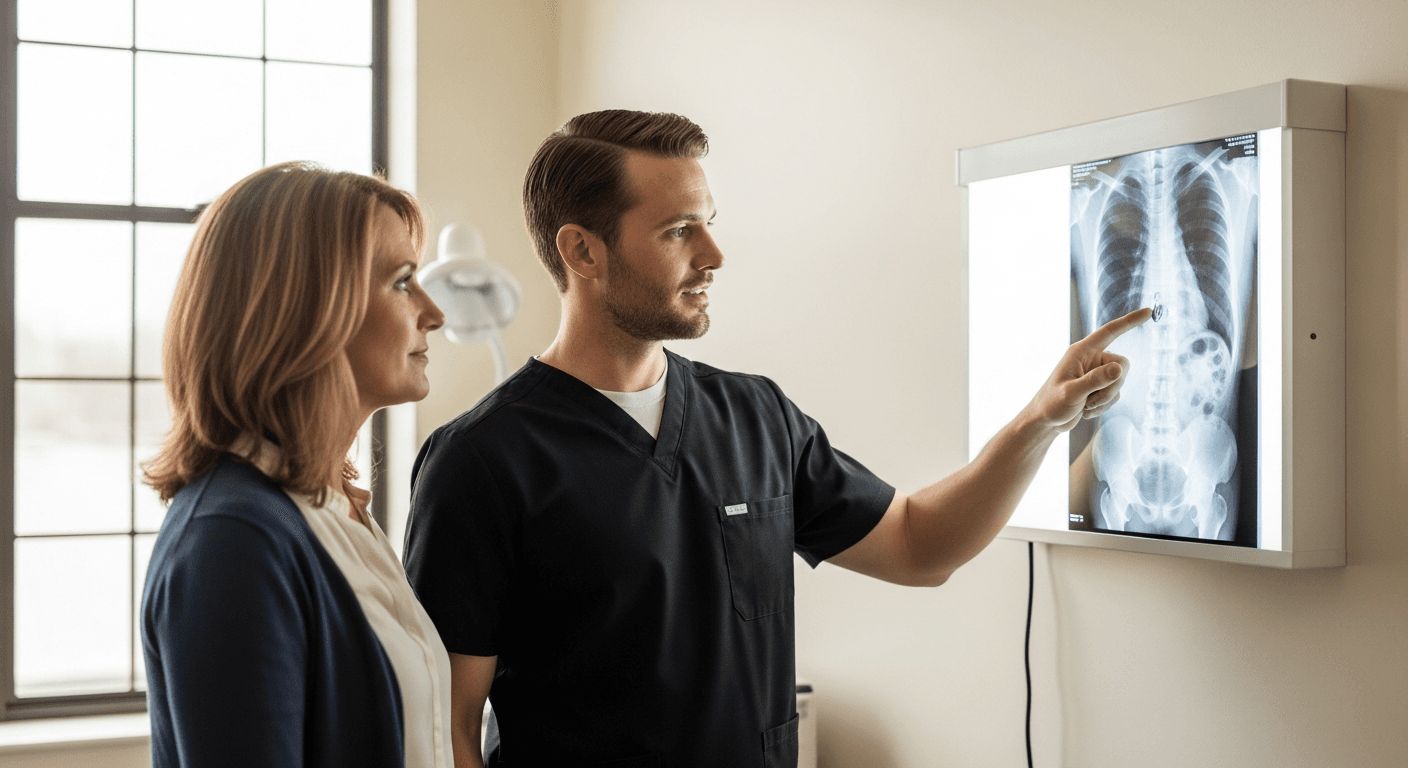
But perhaps most important is the imaging analysis. MRI scans show soft tissues—discs, nerves, ligaments—with exquisite detail. CT scans reveal bone structure and any degenerative changes. X-rays, particularly flexion-extension X-rays where we take images while you bend forward and backward, can show abnormal motion indicating instability. We correlate what we see on imaging with what you've told us about your symptoms and what we've found on examination. Surgery makes sense only when all three align—when we can identify a structural problem on imaging that corresponds to your symptoms and examination findings.
We also believe strongly in conservative treatment first. Physical therapy, anti-inflammatory medications, epidural steroid injections, lifestyle modifications—these approaches resolve the majority of spine problems without surgery.
We recommend surgery only when conservative treatment has been genuinely tried and failed, when your symptoms are severe enough to significantly impact your life, and when we're confident that the procedure will address the underlying problem. This conservative-first philosophy means that when we do recommend surgery, you can have confidence it's truly necessary.

Your Journey from Consultation to Recovery
If minimally invasive surgery proves to be the right choice, you'll want to know what the experience actually entails. The process begins with pre-operative planning, which has become remarkably sophisticated. We review your imaging in detail, taking precise measurements and planning the exact trajectory for instruments, the size and position of implants if needed, and any anatomical challenges we might encounter. This preparation means that when we're in the operating room, we're executing a carefully designed plan rather than making it up as we go.
Most minimally invasive spine procedures are performed at our Joint Commission-accredited outpatient surgery centers. These facilities are specifically designed for spine surgery, with advanced imaging equipment built into the operating rooms and specialized instruments for minimally invasive techniques. The centers are staffed by teams who perform these procedures every day—they know the nuances, they anticipate needs, and they work together with practiced efficiency.
On the day of surgery, you'll arrive a few hours before your procedure for preparation. After anesthesia, the actual surgery typically takes one to three hours depending on complexity. You'll wake in the recovery area, and remarkably, most patients walk that same day. The reduced tissue trauma means pain is manageable with oral medications, and there's no reason to stay immobile. Early walking actually speeds recovery by promoting blood flow and preventing complications like blood clots.
For many procedures, you'll go home the same day. Some patients, particularly those who've had fusion procedures, might stay overnight for monitoring. But even these patients typically go home within twenty-four hours, returning to the comfort of their own bed far sooner than would be possible with traditional surgery. Home recovery focuses on gradually increasing activity while avoiding movements that stress the surgical site. Most patients stop prescription pain medication within one to two weeks, though some soreness and fatigue are normal for several weeks as your body heals.
Taking the Next Step
If chronic back pain or neck pain is limiting your life, if conservative treatments haven't provided the relief you need, if you're wondering whether surgery might be an option, the first step is simply a conversation. At Legacy Neurosurgical & Spine Centers, we offer free consultations at all nine of our locations across the Atlanta area. There's no pressure, no rush to make decisions—just an opportunity to have your questions answered by experienced spine surgeons who will give you honest, straightforward advice about your options.
You can reach our patient care coordinators at (770) 291-8987 or schedule online. They'll help you schedule an appointment at whichever location is most convenient—Atlanta, Marietta, Riverdale, Peachtree City, Carrollton, Cartersville, Columbus, Rome, or Tucker. Bring your imaging if you have it, along with a list of treatments you've tried and any questions you want answered. Come ready to have a detailed conversation about your spine health and what might be possible.
Spine problems rarely improve on their own. Without treatment, they often gradually worsen, limiting your life more and more over time. But with modern minimally invasive techniques, solutions are available that would have seemed impossible just a generation ago. The question isn't whether we can help—it's whether you're ready to explore the possibilities.
The information provided in this article is for educational purposes only and should not be considered medical advice. Always consult with a qualified healthcare provider regarding your specific condition and treatment options.